There's a moment every bride knows.
You're standing in front of a mirror, dress on, and you look down. The shoes either complete the picture — or they quietly undo it.
It's not always about price. Plenty of brides have worn affordable wedding shoes that photographed beautifully and felt comfortable through six hours of dancing. Just as many have overspent on a pair that looked impressive in the box and caused real discomfort by the reception.
The difference usually isn't the price tag. It's the choices made within whatever budget exists.
This is about making those choices well.
Before anything else, it helps to understand how wedding shoes get judged — mostly through photos. Not in person, not in a fitting room, but frozen in an image that will exist for decades.
Your photographer will capture your shoes in detail shots, in full-length portraits, and in candid moments where your feet happen to be in frame. That's where "camera luxury" either works for you or doesn't.
Certain materials photograph as expensive. Others, despite costing the same, somehow look flat.
Satin bridal shoes sit at the top of the list for a reason. The fabric catches light in a way that reads as soft and deliberate — not shiny in a cheap sense, but luminous. A well-made pair of satin bridal shoes in ivory or champagne will hold up in photographs far better than a pair made from stiff synthetic lace or overly glossy patent. When choosing wedding shoes in this style, the base material does most of the heavy lifting — not the price point. A pair of bridal shoes in quality satin can look just as polished as something from a designer shelf.
White high-heeled shoes also perform well on camera when the silhouette is clean. A pointed or almond toe, a heel that tapers evenly, a strap that lies flat — these details signal quality before anyone checks the label.
Some things are harder to fake than others.
Embellishments are the first place budget shoes tend to show their hand. Rhinestones that sit unevenly, bows that pucker at the centre, beading that catches on fabric — these details draw attention in the wrong direction. What looks like decoration in the product photo can look like an afterthought in person.
The heel itself is another tell. A heel that wobbles slightly, a base that looks too wide or too thin for the shoe's proportions, or a covering that starts to peel — these are things photographers and guests notice even if they don't say so.
Then there's finish quality around the toe box and the back seam. Bridal shoes, like wedding dresses, are examined closely. Poorly finished edges and glue visible at the sole line communicate something about the overall construction that no embellishment can cover. These are the details that tell you — and your photographer — everything about a pair of wedding shoes before a single photo is taken.
The reassuring part? Most of these issues don't require spending more. They require spending smarter.
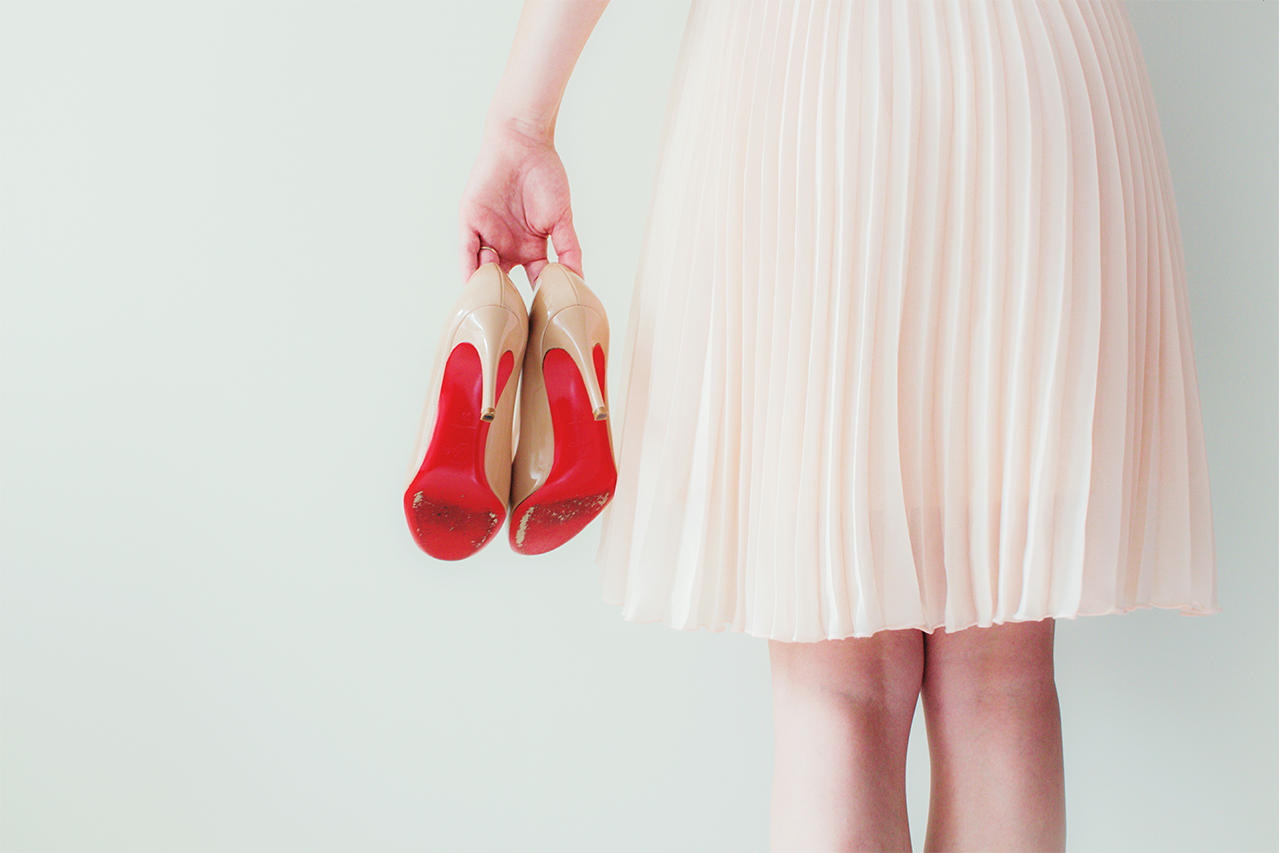
The good news is that the most visible parts of wedding shoes — the silhouette, the fabric, the heel shape — are available across a wide price range. Most brides are genuinely surprised by how much camera luxury is achievable when shopping for wedding shoes with a clear eye for construction over decoration.
A minimalist mule bridal shoe, for example, often costs significantly less than a heavily embellished style. And on camera, it frequently reads as more refined. Simple, clean, and intentional tends to photograph better than busy and detailed.
The same principle applies to wedding shoes with subtle pointed toes or slim ankle straps. Strip away the extra ornamentation, and what remains is often a very elegant shoe at a very reasonable price.
If you love the idea of bridal heels and flats as interchangeable options — heels for the ceremony, flats for the reception — this approach also gives you room to allocate budget thoughtfully. A pair of bridal flats doesn't need to be expensive to look polished, especially if the material and colour complement the dress well.
Embellishments, as mentioned, are where cost can creep up quickly. A single oversized bow or cluster of pearls might add significant cost without adding much visual value in photographs. If that detail matters to you personally, keep it. But if the goal is camera luxury on a real budget, a clean shoe often wins.
Two things consistently separate a comfortable, lasting bridal shoe from one that causes problems: the lining and the fit.
The lining is the part of the shoe nobody photographs but everybody feels. A cheaply lined wedding shoe will cause friction and blistering faster than almost anything else. A well-lined shoe, even in an affordable pair, will feel different from the first wearing.
When you're trying on bridal shoes, pay attention to how the interior feels against your heel and the ball of your foot. That texture matters more on a ten-hour wedding day than it does in a fitting room. The right pair of bridal shoes should feel supportive from the first wear — not just after breaking them in.
Fit, similarly, is non-negotiable. A pair of bridal heels that are slightly too large will shift with every step. Slightly too narrow, and you'll spend the reception focused on your feet instead of your guests. Budget-friendly wedding shoes in the right size and width will always outperform expensive shoes that don't fit well.
If it comes down to a choice between a more expensive pair that fits perfectly and a cheaper pair that requires insoles and padding just to be tolerable — pay for the fit.
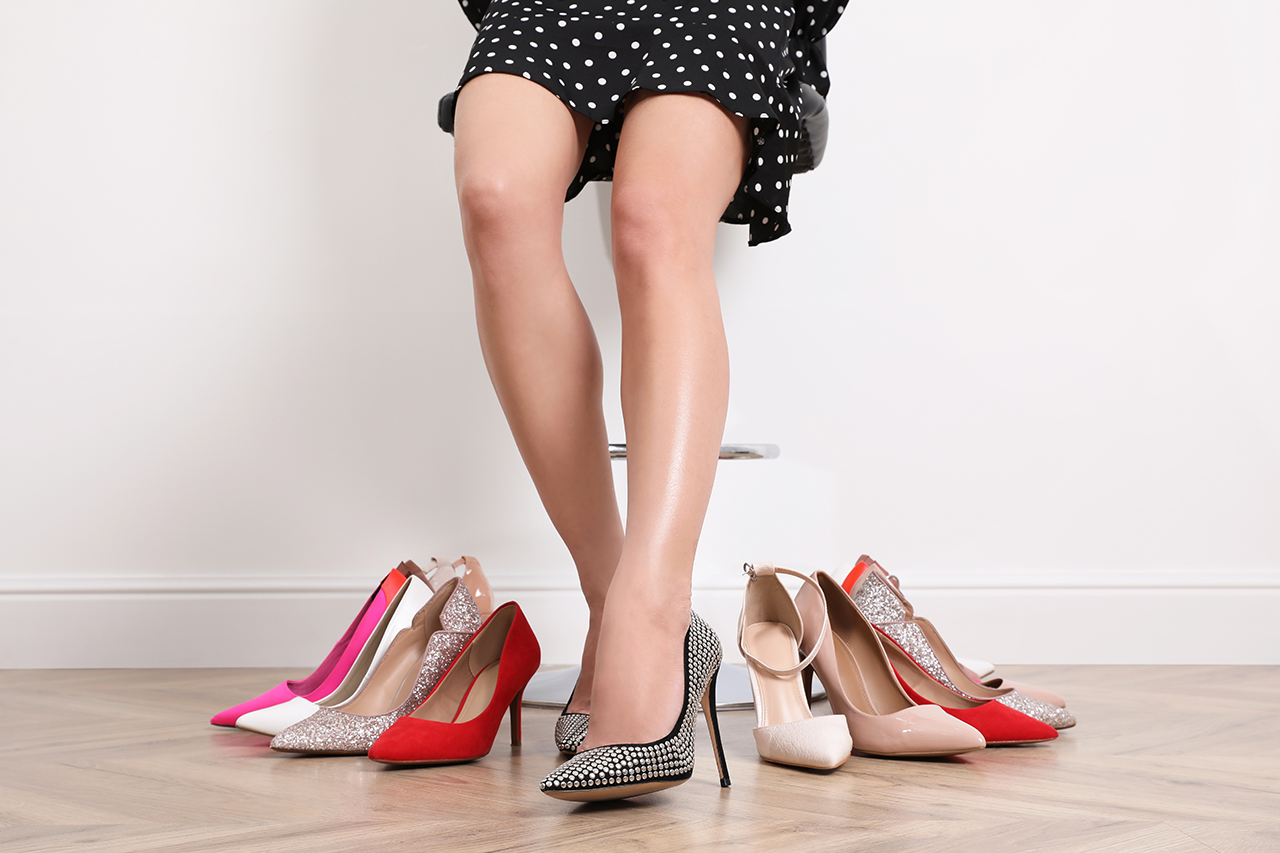
Bridal heels and flats are often treated as two separate decisions. They don't have to be.
Many brides now plan their shoes the same way they plan their energy — one option for the formal part of the day, another for when the dancing starts. A pair of bridal flats in white or ivory, chosen to echo the fabric of the dress, can be elegant and practical at the same time.
This approach also takes the pressure off a single pair of wedding shoes to do everything. The heels can be chosen purely for visual impact. The flats can be chosen purely for comfort. Both can be found at sensible prices when you're not asking one pair to perform every role.
A mule bridal shoe works particularly well as a reception option — easy to slip off briefly, easy to put back on, and clean enough in silhouette to still look intentional in photographs.
In the end, what most brides remember isn't the cost of their wedding shoes. It's whether they felt comfortable, whether they photographed well, and whether the whole look came together the way they'd imagined. The right wedding shoes don't announce themselves — they simply belong.
Getting there doesn't require an unlimited budget. It requires knowing where quality shows up in a shoe — and where it doesn't.
Choose materials that read as luxurious on camera. Avoid embellishments that photograph poorly. Invest in lining and fit above everything else. And give yourself the option of a second pair for when the evening changes pace.
Because the best bridal shoes aren't the ones with the most impressive price tag. They're the ones you barely think about — because everything feels exactly right.
And that's what good planning looks like, at any budget.
At shoeledger.xyz, we’re here to help you step into every moment with style.
We’re here to make shopping simple, stylish, and exciting.